Stress Scores vs. Subjective Feel
The Feeling Lies
Section titled “The Feeling Lies”Day 3 of your dry fast. You feel… okay? Maybe a little tired, but nothing dramatic. You’re handling it. Mind over matter.
Then you check your watch: Stress score is in the red. RHR is up 20%. HRV has collapsed.
Which is true—your feeling or the data?
The data. Every time.
Why Subjective Assessment Fails During Fasting
Section titled “Why Subjective Assessment Fails During Fasting”Adaptation and Normalization
Section titled “Adaptation and Normalization”Your body is remarkably good at normalizing distress. What feels “okay” on day 3 of a fast would have felt terrible on day 1.
The baseline shifts.
You’re not feeling fine because you’re fine. You’re feeling fine because your nervous system is recalibrating “normal” to include profound stress.
Hormonal Masking
Section titled “Hormonal Masking”Several hormones active during fasting affect subjective perception:
- Cortisol: Initially increases alertness and masks fatigue
- Adrenaline: Creates sense of energy despite depletion
- Endorphins: May provide mild euphoria, masking distress
- Ketones: Anxiolytic effects can make you feel calm despite crisis
You feel calm because ketones are sedating your perception of the crisis you’re in.
Cognitive Impairment
Section titled “Cognitive Impairment”As the crisis develops:
- Brain function degrades subtly
- Self-assessment accuracy decreases
- You’re the last to know you’re impaired
This is why we don’t let pilots assess their own hypoxia. By the time they feel it, they’ve already made mistakes.
What Stress Scores Actually Measure
Section titled “What Stress Scores Actually Measure”The Physiology
Section titled “The Physiology”Most wearables calculate stress scores from Heart Rate Variability (HRV).
What HRV reflects:
- Parasympathetic tone: Higher HRV = more rest-and-digest activity = lower stress
- Sympathetic tone: Lower HRV = more fight-or-flight activity = higher stress
The calculation: Low HRV → High stress score. High HRV → Low stress score.
Why It’s Objective
Section titled “Why It’s Objective”Your wearable doesn’t know:
- That you’re fasting
- That you’re trying to push through
- That you have a goal to reach 7 days
- That you believe suffering equals healing
It just measures beat-to-beat variation in your heart rhythm. That variation directly reflects autonomic nervous system balance.
The Disconnect Examples
Section titled “The Disconnect Examples”Scenario 1: “I Feel Fine, Watch Says Danger”
Section titled “Scenario 1: “I Feel Fine, Watch Says Danger””What you experience:
- Energy is okay
- No overwhelming hunger
- Mind is clear enough
- “I can keep going”
What your watch shows:
- Stress score: 75/100 (high)
- RHR: +25% above baseline
- HRV: Down 40% from normal
Reality: You’re in sympathetic overdrive. Magnesium is depleted. Crisis is developing. The fact that you “feel fine” is the ketone-induced calm masking the storm.
Action: Trust the watch. Increase magnesium. Reassess in 4 hours.
Scenario 2: “I Feel Terrible, Watch Says Fine”
Section titled “Scenario 2: “I Feel Terrible, Watch Says Fine””What you experience:
- Hunger is intense
- Craving water
- Irritable and tired
- “I can’t do this”
What your watch shows:
- Stress score: 25/100 (low)
- RHR: At baseline
- HRV: Normal range
Reality: You’re experiencing normal fasting discomfort without physiological crisis. This is psychological struggle, not metabolic collapse.
Action: Trust the watch. Your body is fine. Your mind is struggling. Different problem, different solution.
Scenario 3: Both Aligned
Section titled “Scenario 3: Both Aligned”What you experience:
- Clear, calm, functional
- Mild hunger but manageable
- Good energy for day 5
- “This feels sustainable”
What your watch shows:
- Stress score: 20/100 (excellent)
- RHR: Baseline
- HRV: Stable or even improved
Reality: This is the Magnesium Method working. Metabolic benefits without metabolic crisis. This alignment is the goal.
Device-Specific Stress Indicators
Section titled “Device-Specific Stress Indicators”Garmin
Section titled “Garmin”Key metrics:
- All-Day Stress: Graph showing stress levels throughout day
- Body Battery: Energy reserve estimate based on stress/activity
- Stress Level: Current reading 0-100 (higher = more stress)
Warning signs:
- Stress predominantly orange/red throughout day
- Body Battery not recovering overnight
- Stress score staying above 50 even at rest
Key metrics:
- HRV Balance: Comparison to your baseline
- Resting Heart Rate: Trend over days
- Readiness Score: Composite of multiple factors
Warning signs:
- HRV significantly below baseline
- Readiness score dropping each day
- Nighttime HR not reaching normal lows
Key metrics:
- Recovery Score: How well you’ve recovered (0-100%)
- HRV: Measured during sleep
- Resting Heart Rate: Overnight average
Warning signs:
- Recovery in red (less than 33%)
- HRV trending downward over fast
- Strain accumulating without recovery
Apple Watch
Section titled “Apple Watch”Key metrics:
- Heart Rate: Resting and active
- HRV: Available in Health app
- Cardio Fitness: VO2 max estimate
Warning signs:
- Elevated heart rate notifications
- HRV dropping consistently
- Unusual readings flagged by Health app
How to Use Both: Integration Strategy
Section titled “How to Use Both: Integration Strategy”Trust the Watch, Interpret with Feel
Section titled “Trust the Watch, Interpret with Feel”The framework:
- Check objective metrics first — What does the data say?
- Note subjective state — How do I actually feel?
- Identify the pattern:
| Data | Feel | Interpretation |
|---|---|---|
| Good | Good | Optimal — continue |
| Good | Bad | Psychological struggle — mental game needed |
| Bad | Good | Hidden crisis — intervene immediately |
| Bad | Bad | Obvious crisis — intervene or stop |
The Dangerous Quadrant
Section titled “The Dangerous Quadrant”Data BAD + Feel GOOD = Maximum danger zone
This is where the traditional faster says “I’m pushing through, I’ve got this” while their body is in sympathetic collapse.
Always trust the data in this scenario. Your perception is compromised.
When to Override the Watch
Section titled “When to Override the Watch”Known Confounders
Section titled “Known Confounders”Occasionally, the watch is wrong:
- Just exercised: Stress elevated from activity, not from crisis
- Alcohol/caffeine: Affects HRV independent of fasting state
- Poor sensor contact: Unreliable readings (check strap fit)
- Medication effects: Beta blockers, etc. alter heart dynamics
The Override Protocol
Section titled “The Override Protocol”If you believe the watch is wrong:
- Wait 30 minutes in complete rest
- Re-measure in controlled conditions
- Cross-reference with second metric (RHR if checking stress, stress if checking RHR)
- If still elevated, trust the watch
Default position: The watch is right, you are wrong.
Key Takeaways
Section titled “Key Takeaways”- Subjective feel is unreliable during extended fasting
- Ketones and hormones mask your perception of crisis
- Stress scores reflect objective autonomic nervous system state
- Data BAD + Feel GOOD is the danger zone — intervene immediately
- Trust the watch unless you have specific, verified reasons not to
The Humbling Truth
Section titled “The Humbling Truth”Your watch is smarter than you during a dry fast.
It doesn’t have an ego invested in reaching day 7. It doesn’t believe suffering equals progress. It doesn’t rationalize warning signs.
It just measures physiology.
Let it guide you.
For the complete biometric-guided protocol, see The Death of the Acidosis Crisis.
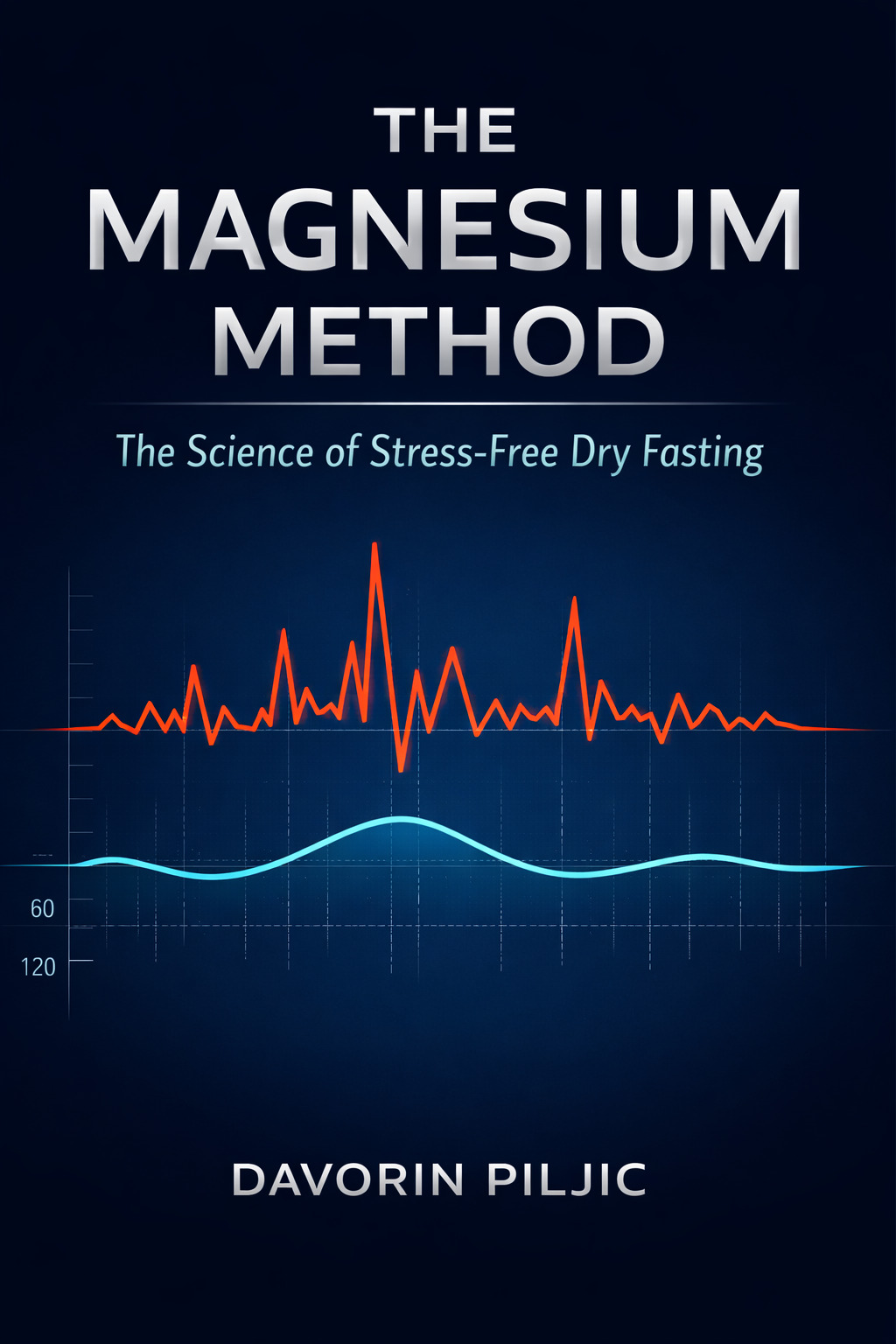
Get the Complete Protocol
The science is free. The step-by-step implementation manual with exact dosing thresholds, timing charts, and refeed schedules is $9.99 on Amazon.
- ✓ RHR-Based Dosing Matrix
- ✓ Magnesium Citrate Charts
- ✓ 48-Hour Refeed Protocol
- ✓ Crisis Prevention Thresholds
30-day money-back guarantee via Amazon